Life, Earth And Space
-
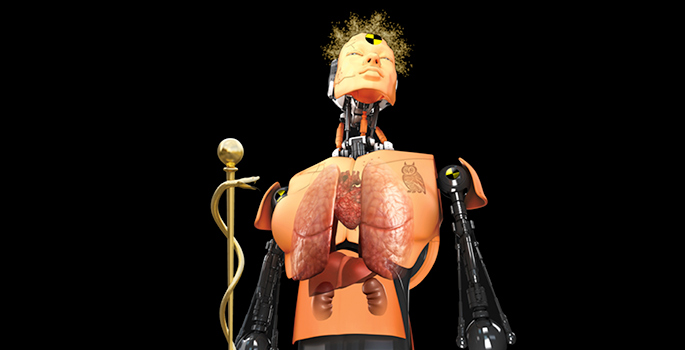
Significant progress toward creating “benchtop human� reported
Vanderbilt physicist John Wikswo reported significant progress toward creating “homo minutus� – a human-on-a-chip that can be used to test drugs and toxins – on Mar. 26 at the Society of Toxicology meeting in Phoenix. Read MoreMar 27, 2014
-

Shifting evolution into reverse promises cheaper, greener way to make new drugs
By shifting evolution into reverse to produce an expensive HIV drug out of a simple sugar, Vanderbilt chemist Brian Bachmann has shown that it may be possible to manufacture exotic and expensive synthetic drugs as easily as brewing beer. Read MoreMar 24, 2014
-
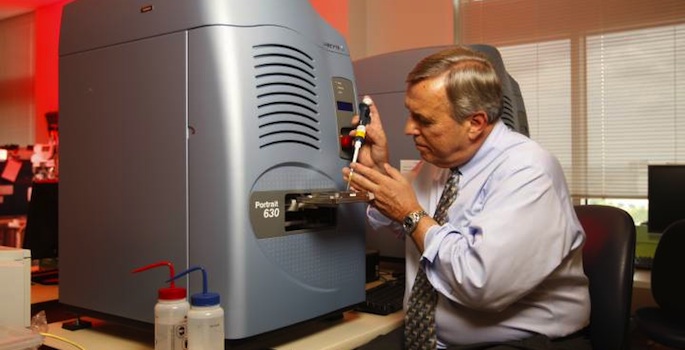
Vanderbilt awarded $16.5 million agreement to determine how toxic agents affect human cells
Vanderbilt University has been awarded a Cooperative Agreement with the Defense Advanced Research Projects Agency and the Army Research Office that is worth up to $16.5 million over five years. Read MoreMar 3, 2014
-
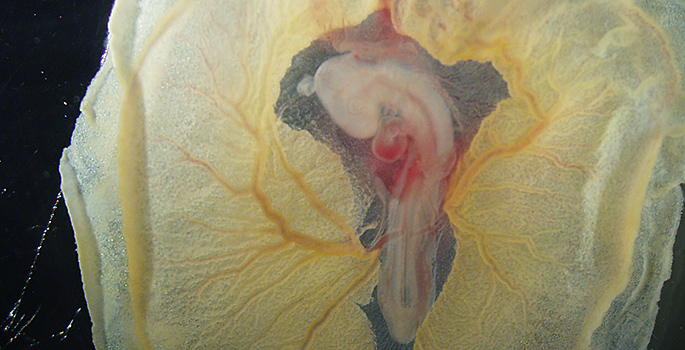
Baby hearts need rhythm to develop correctly
The mechanical forces generated by the rhythmic expansion and contraction of cardiac muscle cells play an active role in the initial stage of heart valve formation. Read MoreFeb 18, 2014
-
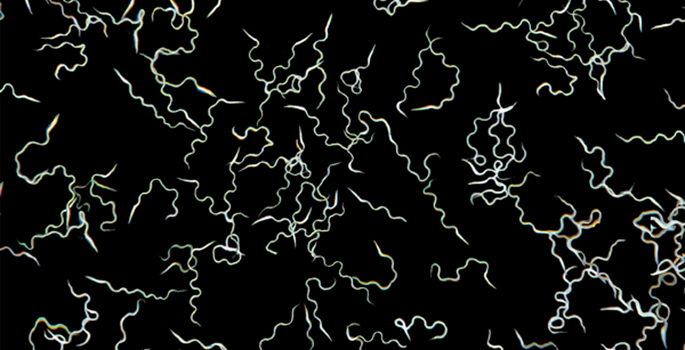
Mosquito sperm have a sense of smell
Vanderbilt biologists have discovered that mosquito sperm have a “sense of smell� and that some of same chemicals that the mosquito can smell cause the sperm to swim harder. Read MoreFeb 3, 2014
-

In the brain, the number of neurons in a network may not matter
A study has found that the time it takes neural networks in the brain to make decisions is remarkably stable regardless of size: a finding that could make it easier to achieve the goal of the President's BRAIN Initiative established last spring. Read MoreFeb 3, 2014
-

Vanderbilt research featured in Science ºüÀêÊÓƵ’ top science story of 2013
The popular science magazine Science ºüÀêÊÓƵ has chosen a story featuring research by Vanderbilt's Seth Bordenstein and Robert Brucker as its top science story for the year. Read MoreJan 17, 2014
-

Surprising new class of “hypervelocity stars� discovered escaping the galaxy
Two Vanderbilt astronomers are among an international team that has discovered a surprising new class of “hypervelocity stars� – solitary stars moving fast enough to escape the gravitational grasp of the Milky Way galaxy. Read MoreJan 9, 2014
-

Use water at ‘comfortable’ temperature to wash hands and fight global warming
Vanderbilt University researchers say to take down the water temperature a degree or two when washing your hands to help battle global warming. Read MoreDec 10, 2013
-
A NASA astrophysicist and Vanderbilt graduate student Lisa Upton have confirmed the existence of giant convection cells flowing slowly on the sun, lending further insight into the transport of heat from its core and the origin of cycles of sunspot activity that affect essential satellite-based communications such as cell phones and TV broadcasting.
Dec 6, 2013
-
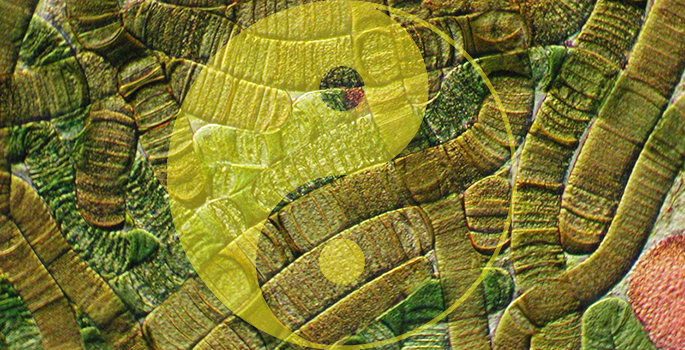
Tricking algae’s biological clock boosts production of drugs, biofuels
Tricking algae’s biological clock to remain in its daytime setting can dramatically boost the amount of commercially valuable compounds that these simple marine plants can produce when they are grown in constant light. Read MoreNov 7, 2013
-
Science has progressed from wild speculation about Earth’s planetary neighbors—including how they formed and whether they are inhabited—to a better understanding of our celestial neighborhood, David Weintraub, professor of astronomy, writes in "Scientific American."
Oct 14, 2013
-

Finding the place where the brain creates illusory shapes and surfaces
Neuroscientists have identified the location in the brain's visual cortex responsible for generating a common perceptual illusion: seeing shapes and surfaces that don't really exist when viewing a fragmented background. Read MoreSep 30, 2013
-

Lacy’s crystallographic research achievements recognized
D. Borden Lacy, Ph.D., associate professor of Pathology, Microbiology and Immunology, and Biochemistry, will receive the 2014 Margaret Etter Award from the American Crystallographic Association (ACA) for outstanding achievement and exceptional potential in crystallographic research demonstrated by a scientist at an early stage of their independent career. Read MoreSep 19, 2013
-
Tiffiny Tung, associate professor of anthropology, is on familiar terms with the dead. She may not know their names, but she can tell you a surprising amount of information about how they lived—and even, on occasion, how they died.
Sep 11, 2013
-

A brighter method for measuring the surface gravity of distant stars
Astronomers have found a clever new way to slice and dice the flickering light from a distant star in a way that reveals the strength of gravity on its surface. Read MoreAug 21, 2013
-
Scientists at Vanderbilt University and the New York Health Department say colonies of Antarctic brittle stars may be especially vulnerable to the effects of ocean acidification.
Aug 20, 2013
-
Fisk and Vanderbilt's Bridge Program mentors talented minority students pursuing advanced science degrees. Keivan Stassun, professor of astronomy and director of the Fisk-Vanderbilt Masters-to-Ph.D. Bridge Program, is quoted.
Aug 9, 2013
-
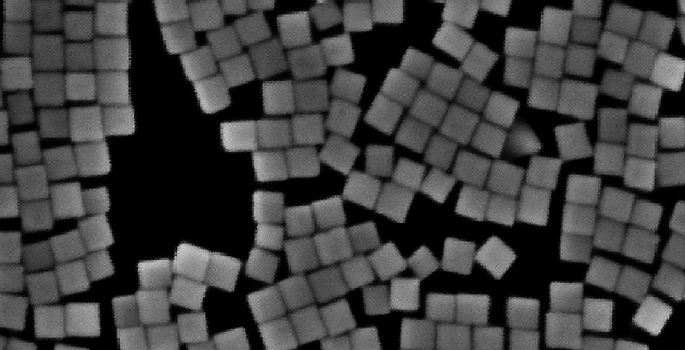
Size matters in nanocrystals’ ability to release gases
More efficient catalytic converters on autos, improved batteries and more sensitive gas sensors are some of the potential benefits of a new system that can directly measure the manner in which nanocrystals adsorb and release hydrogen and other gases. Read MoreAug 6, 2013
-
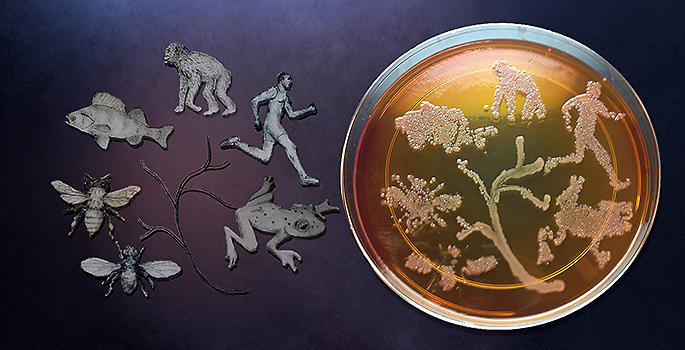
Microbes can influence evolution of their hosts
A new study provides the first direct evidence that microbes can contribute to the origin of new species by reducing the viability of hybrids produced between males and females of different species. Read MoreJul 18, 2013