
How does a spark of an idea become a life-saving medical device? Engineer, inventor and entrepreneur traces that spark back to his childhood.

He was encouraged to weave both imagination and investigation into his learning.
鈥淕rowing up my parents really trained me to be a researcher without even knowing it,鈥� said Webster, senior associate provost for and head of the .
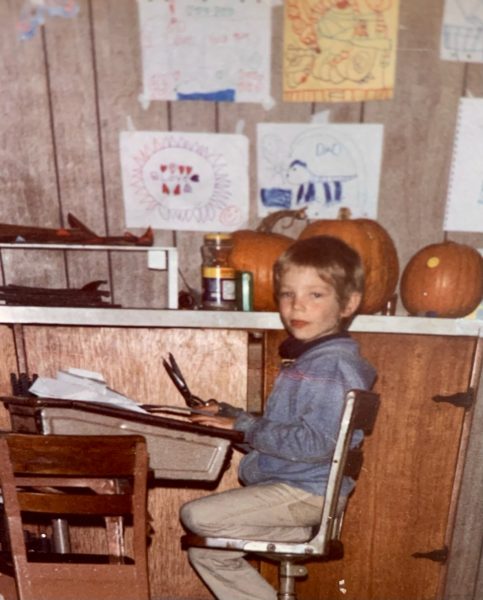
鈥淚 was homeschooled, and my mom and dad empowered me to turn the world into a research problem. They鈥檇 say, 鈥榳hy don’t you figure out how to do an experiment on this or how would you get more information about that?鈥欌�� said Webster, who is also the Richard A. Schroeder Professor of Mechanical Engineering, professor of electrical engineering, otolaryngology, neurological surgery, urologic surgery and of medicine.
PASSION FOR SURGICAL ROBOTICS

Webster fell in love with solving highly technical problems. But unlike many mechanical engineers, he wasn鈥檛 drawn to robots themselves until he saw the potential of using the technology to help save lives.
As an undergraduate at Clemson in 2001, Webster learned about the first transatlantic tele-surgical operation using a robot.
鈥淭hat operation was amazing, and even though the entire field was just starting, I knew surgical robotic engineering is what I wanted to work on, and it鈥檚 what led me to graduate school at Johns Hopkins University,鈥� he said.
BREAKTHROUGH DEVICE SUCCESSES
Webster has greatly advanced surgical robotics with a focus on improving accuracy and reducing invasiveness during procedures.
鈥淭he problems I love solving involve creating smaller tools that enhance a surgeon鈥檚 dexterity, allowing them to make smaller incisions or even no incisions so we don’t leave patients with months of recovery or complications,鈥� Webster said.
Innovations from Webster鈥檚 lab have resulted in more than 75 patents and applications and two startup companies, and . The technology replaces traditional endoscopes, allowing surgery in some of the most difficult-to-reach areas of the body.

Both companies received from the Food and Drug Administration and successfully completed first human use of their devices.
鈥淚n May 2025 we were able to remove 11 tumors out of six patients with bladder cancer. All of the surgeries were completely successful, and all tumors residing in the bladder鈥檚 surface layers were entirely removed,鈥� he said.
Webster鈥檚 work is also respected among his peers. Recently, he was elected Fellow of the National Academy of Inventors as well as elevated to IEEE Fellow, a prestigious title awarded by the Institute of Electrical and Electronics Engineers to members who have made significant contributions to the fields of engineering, science and technology.
AI IMPROVING SURGERY
Webster鈥檚 latest work brings artificial intelligence into the lab by automating devices.
鈥淚 believe AI in surgery will provide better surgical care for patients around the world in terms of democratizing the skills of the best surgeons through AI robotic devices,鈥� said Webster, whose Vanderbilt lab and startup Virtuoso recently received a $12 million award from the around automating robotic surgery.
鈥淚magine if every single patient could be treated as well as we treat the top 10 percent right now? AI automation and robotics have the potential to make that happen,鈥� Webster said.
PASSION FOR PARTNERSHIP
Webster鈥檚 work continues to push the boundaries of surgical robotics, ensuring Vanderbilt remains at the forefront of medical technology innovation. But he knows successfully bringing an idea from concept to creation is like carrying a candle through a snowstorm.


As senior associate provost for , a leader in the , and an inaugural , Webster mentors and partners across the university and Vanderbilt University Medical Center to create pathways for other inventors.
鈥淭he system for engineers to get their ideas into doctors鈥� hands is incredibly inefficient,鈥� he said. 鈥淚鈥檓 empowering others at Vanderbilt by helping people with really good ideas through the rough patches that I’ve overcome myself.鈥�
TURNING MEDICAL IDEAS INTO REALITY
Part of that pathway is a new partnership between the university, VUMC and . Nissha invested in one of Webster鈥檚 startups (EndoTheia Inc.) and is moving its Engineering & Innovation Center of Excellence to Vanderbilt under a long-term lease agreement.
鈥淭his is exciting because Vanderbilt can be an idea engine, then Nissha will be able to be a conduit and manufacturing partner for our ideas and technologies to the wider world,鈥� he said.
SPECIAL COLLABORATIONS
Webster鈥檚 favorite collaborations are with his family, his beach volleyball teammates when he鈥檚 taking a much-needed break from the lab, and with his students.


He鈥檚 supported hundreds of undergraduate and graduate research projects and supported the careers of numerous Ph.D. students who are now highly successful innovators within his or other startups or have earned faculty positions.
鈥淲hen I recruit students, the number one thing I’m looking for is a shared career vision of using engineering skills to ultimately help patients by helping doctors do their jobs more effectively,鈥� he said. 鈥淲e are choosing to use our engineering talent to make a positive impact in the world. To me that鈥檚 really fun.鈥�
- Follow the latest from the
- See the impact of the
- about Vanderbilt innovators
- Listen and subscribe to the research-focused , available wherever you get your podcasts

