and , trailblazers in the scholarship of religious studies and theological education, are leading womanist scholars in the American Academy of Religion and the Society of Christian Ethics. Their research background situates them perfectly to co-edit and collaborate on a new anthology, , published in November.听
Townes, , became the first African American to serve as dean of Vanderbilt Divinity School in 2013, evolving into a top scholar of ethics who has helped reimagine theological education while calling for more attention to social justice issues in society.
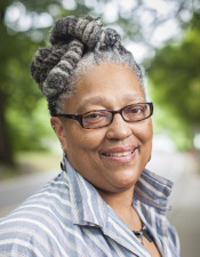
Floyd-Thomas, E. Rhodes and Leona B. Carpenter Professor and associate professor of ethics and society, was recruited to Vanderbilt Divinity School in 2008 in its search for a leading scholar of religion whose work engages the intersectionality of race, gender and economic justice in the realm of women of color鈥檚 engagement and embodiment of religion in society. 听
Along with scholars Shawn Copeland, Eboni Marshall Turman, Angela Sims, Paula Parker, Nikia Robert, Alison Gise Johnson, Vanessa Monroe, Faith B. Harris, Melanie Jones and Renita Weems, their co-edited volume is a tribute to the late Katie Geneva Cannon, who in 1974 became the first African American woman ordained in the United Presbyterian Church. Cannon鈥檚 work lays the groundwork for continued discussions on moral thought among scholars today. 听
鈥淭he goal is to extend Cannon鈥檚 pursuit of a world of inclusivity and hope while realistically analyzing the discrimination, disenfranchisement and systemic hatred that stand as obstacles to the world,鈥� said Townes, who led efforts to pool research expertise from around the country into one volume.听
Floyd-Thomas holds the distinction of being Cannon鈥檚 first doctoral student. In her research at Vanderbilt, she has built upon the foundational work of progenitors like Cannon by naming and providing methods for the field of womanist ethics.听
鈥淲here Cannon detected hatred, she could always harness hope,鈥� Floyd-Thomas said. 鈥淒rawing from family lessons, women鈥檚 literary narratives, social history and critical theory in a manner that was equally innovative and inspiring, Cannon鈥檚 pedagogy emphasized a deep concern with seeing every moment of interaction as potentially transformative. It was through her sensitivity to both the formal and informal moments of learning that she was able to develop a rich synergy between academic rigor, cultural sensitivity and character building in ways that clearly benefited her students while also encouraging her audience鈥攚hether in the classroom, church or community鈥攖hat to be better is to see better and do due diligence in forging a new world.鈥� 听
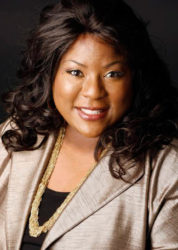
Townes and Floyd-Thomas spoke about the research themes of justice, leadership, embodied ethics and sacred texts highlighted in their latest work and how exploring the field of womanist ethics can offer valuable lessons in the pursuit of equality at this moment in time.听
Q: This book focuses on the work and legacy of Katie Geneva Cannon, considered to be the founder of womanist theology and ethics as a research field. For those new to the field, how do you define it? Why is the field an important research sphere to study and reflect on today?听
ET: Womanist ethics and theology places the social, religious and spiritual worldviews of Black women, primarily in the U.S., at the very center of its work. It understands that issues of class, gender, sex, sexuality, sexual orientation, race and other forms of oppression are theological and moral problems that merit deep religious probing. It is deeply experiential and constructive while also taking on traditional categories such as grace, hope, salvation and evil. It鈥檚 a blend of the theoretical and practical, as womanist ethics and theology seek to inform religious communities and their practices, the academy and society at large.听
Womanist ethics and theology also challenge notions such as objectivity and universals as the standard of excellence in intellectual thought. Instead, it argues that scholars begin our work from our own social locations that deeply influence what we see and know. This does not limit our growth or the possibility of expanding our insights, but we must be honest about where we begin and recognize that this influences us. In short, what can be termed as objectivity by one can be seen as biased by others. This means that we, as scholars, have a marvelous opportunity to blend our experiences with the knowledge that we acquire to help make the world a better place.听
Q: Professor Floyd-Thomas, as Katie Cannon鈥檚 first doctoral student, what do you find notable about the anthology?听
SFT: 听This anthology maps both the genealogy and growing edges of what has become known as womanist canonical ethics by considering the work of womanist social ethicist Katie Geneva Cannon. As the progenitor and founding figure of womanist ethics, Cannon argued that normative ethics was implicitly designed to assign morality, virtue and value in accordance with physical markers, social location and the assumption that the color of one鈥檚 skin was an inextricable indicator of one鈥檚 character. In this regard, Black women were regarded as morally deficient, if not bankrupt. Cannon鈥檚 scholarship and pedagogy pried open the door to other voices that disputed the assumptions and shortcomings of this methodological foundation. As the co-editors of this volume, we draw on Cannon鈥檚 theoretical foundation for womanist thought as the starting point to explore contemporary womanist moral reflection and theological ethics. The themes of justice, leadership, embodied ethics and sacred texts more readily come to the forefront when more voices and viewpoints are empowered to proclaim their truths to the world at large.听
As a field, ethics is the systematic inquiry into how morality works, which essentially boils down to the salient question, 鈥淲hy do people do what they do?鈥� In a society often ruled and run over by the snapshots and soundbites, we barely get a glimpse of what is happening around us and who is doing what. For those who seek to observe trends and patterns, we may be led to focus on how things play out or how they are produced so we can gather broad categories by which we can 鈥渒now鈥� people based on their commonly held beliefs or typical practices. But ethics goes much deeper than that because why people do what they do is a critical attempt to think through the meaning of the human story as it is lived out in one鈥檚 own subjective experience within history. 听
This thoroughgoing pursuit of what I call 鈥渢he why crisis of faith鈥� involves sitting with oneself and others within an ever-growing and evolving context to ask carefully鈥攚hile craving vulnerability and yearning for clearer vision鈥攚hy we believe things to be ultimate that oftentimes disconnect us from our best selves or devalue others. That is why works such as this are efforts to create not merely a scholarly table, but a choir of multiple voices representing this diversity and bringing them into dialogue as a scholarly community where knowledge production is generative, collaborative and iterative. 听
听In womanist scholarship, as Toinette Eugene states, 鈥淥ne does not make or remake anything alone; one cannot ignore the relations one has. To know one鈥檚 self and one鈥檚 situation is to know one鈥檚 company (or lack of it)鈥攊s to know oneself with or against others.鈥� I have been the beneficiary of a conscientiously collaborative interdisciplinary tradition of liberationist scholarship in which collaborative writing such as this anthology has been reconceptualized as a womanist methodology that tackles issues of power鈥攏ot from a siloed position, but from a scholarly table of knowledge production. Therefore, moving forward in this fashion, my scholarship both advocates for and is the product of the value womanism places on scholarly collaboration鈥攁 value arising from the interplay of perspectives and expertise made possible by collaboration and from the efficiency engendered by a suite of complementary strengths. I am a proponent of the womanist model of collaborative appropriation and reciprocity as the basis for promoting greater degrees of common ground, and as a Christian social womanist ethicist, the scholarly impact I have made on my field has often been deliberately collaborative and purposefully interdisciplinary. At its best, most optimal expression, all of these efforts lend themselves in people鈥檚 ability to develop ethical principles and practices vitally important to forming a more just, equitable community as well as to cultivate a shared and viable future. 听
Q:听 Dean Townes, you鈥檝e become a well-known researcher in womanist ethics over the years. What initially drew you to the field?听 How has the field evolved since it was first defined in 1983?听
ET: I鈥檓 a Southern Black woman who was born and raised in the Christian church鈥攖he Black Christian church鈥攐f the late 1950s and 1960s. I grew up seeing and experiencing racism and sexism all around me, and I was fortunate enough to have a pastor, the Rev. Doug Moore, in my formative years who refused to divorce spirituality from social activism. I was raised in a Black trans-class community that ran the gamut from college professor parents, schoolteachers, tobacco factory works, a house of ill repute, lawyers and doctors. I was also raised by Black women who had a fierce relationship with God and passed on to me and all the little children that God loves us, and we were precious in his (sic) sight. In short, I had the makings of being drawn to womanist ethics and theology coming out of the womb, but for many years had no name for how I had been shaped theologically and as a moral person. When Alice Walker first put into print the notion of 鈥渨omanist,鈥� it was a homecoming for me because I could argue, as a scholar, that Black women鈥檚 religious and moral insights matter and can go toe to toe with the likes of the Niebuhr brothers or James Cone. It was liberating and remains so.听
When womanist thought first became a voice in the academy, the majority of Black women who understood ourselves as womanists were also ordained clergy or women religious from a variety of denominations. We were shaped by our deep commitment to the church while also being critical of its sexist practices. We also recognized that our voices and experiences were not present in either Black theology or feminist theology, so it was important to be clear that Black women had been thinking theologically for decades鈥攊t was just not acknowledged as such. The first generation of womanists like Katie Cannon had to carve out the importance and significance of Black women鈥檚 thought not only in the academy, but also the church. It then made it possible for folks like me in the second generation to build on this and take on issues such as postmodernism, environmental justice, physical and sexual abuse, work and labor鈥� exploring these issues through the matrix of class, sex and race at bare minimum and also with the skills we had acquired as trained theologians, ethicists, historians, pastoral theologians, homileticians and biblical scholars.听
What this means is that with each new generation, the field expands and new questions that are pressing for that generation are added to the conversation. The older questions and insights may remain, but we must be open to what the new generation of scholars are seeing and saying. In short, womanist ethics and theology are always evolving, and it would be a tremendous disservice to Black women鈥檚 lives and witness to make it a 鈥渢hing鈥� instead of the ever-emerging methodology it is.听
Q: Dean Townes, some of your latest work explores research themes related to justice, leadership, embodied ethics and sacred texts. What are some of the key takeaways for readers?听
ET: We must recognize who we are, what has shaped us, and how we can make the world a better place as individuals and as groups. We have so much untapped potential, and it is up to us to have the will and good sense to place our lives in a bone-deep partnership with God to help create a more just and loving society and greater respect for the creation that surrounds us.听
Q: How does this work have a practical application to our world today? What are some examples of how the average person can think about the issues your research examines and see why it matters in our society right now?听
ET: The essays in this book are grounded in everyday experiences such as racism, survival, spiritual practices, leadership, self-image and making moral and just decisions for the individual and in communities. These are issues that touch many of us or folks we know. As the authors begin with their individual experiences, each also invites the reader to think about not only what she is saying, but the ways in which the issue at hand also touches the readers鈥� lives. If the writer has done her work well and the reader is open to exploring an issue through another lens, a marvelous conversation can ensue between the reader and writer that hopefully sparks new insights and possibilities. We have a chance to learn from others as we continue to explore the world from where we stand.听
Q:听 Dean Townes, you are preparing to wrap up your deanship in June 2023 and will return to the faculty in 2024. What鈥檚 next for you on the research front?听
ET: When I accepted the offer to join Vanderbilt, I had just begun a long-delayed research leave and had only gotten to the point where I discovered that the project I thought I would undertake was, though interesting, not really viable in a sustained way. So I had just begun to think about what might be next, but that was put on hold. In my last solo book, Womanist Ethics and the Cultural Production of Evil (2006), I developed the concept of the fantastic hegemonic imagination. What I was trying to capture was the way in which we use caricatures and stereotypes of each other to define one another, such that these stereotypes become the 鈥渢ruth鈥� about others. This allows us to commit all types of systematic evils such as empire and conquest, racism, heterosexism and homophobia, and more. The book took a while to catch on, and it wasn鈥檛 until just as I was coming to VDS in 2013 that I was being invited to talk about it in public settings and that it began being used in classrooms. In the intervening years, another concept has begun to emerge for me: colored orneriness. I am still trying to figure out what I mean by this and if this is related to the gaps I left open with the fantastic hegemonic imagination. Working through this will be at the top of my 鈥渨hat鈥檚 next?鈥� list.听
听
###听
听