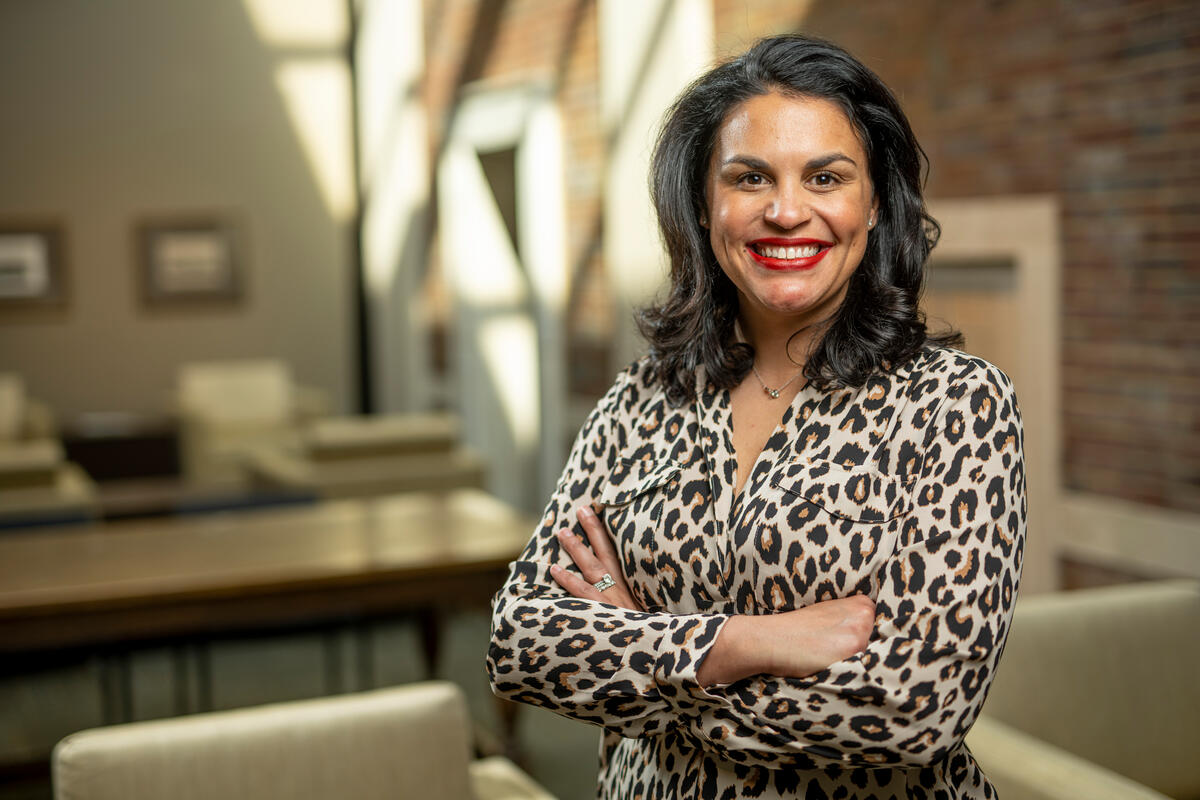
Growing up, Rebecca VanDiver, assistant professor of history of art, spent afternoons in her father鈥檚 custom framing shop, running between rows of molding. With one parent in the framing business and the other working in elementary school education, VanDiver jokes that she was 鈥減redestined鈥� to become an art historian.
VanDiver focuses her research on African American artists鈥攑articularly Black female artists of the 20th century. In the classroom, she presents art history not only as a discipline that allows for a study of the history of artistic movements and style, but also as a lens to study culture and history. She argues that all academic discourse, including that of scholars, should be scrutinized.
鈥淚 want students to understand that the scholarship we read is a frame,鈥� she says. 鈥淚t鈥檚 one way of telling this story, and there are many other ways to tell it.鈥� This reframing is particularly significant when bringing more marginalized voices to the table.
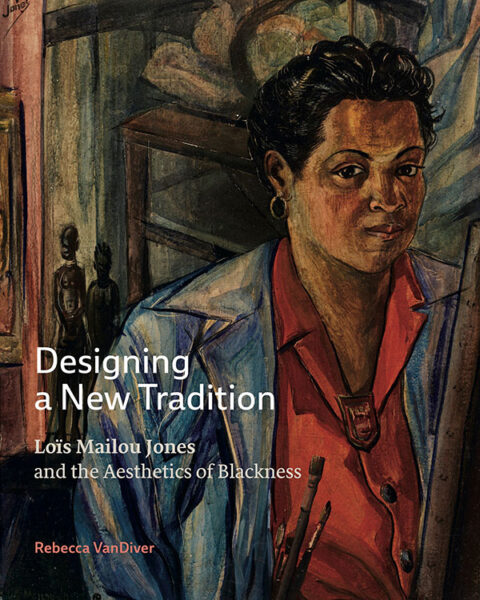 Her recently published book, Designing a New Tradition: Lo茂s Mailou Jones and the Aesthetics of Blackness (Penn State University Press, 2020), shines a light on an unseen artist and corner of American art history. 鈥淟o茂s Mailou Jones was desperately in need of a single artist monograph,鈥� VanDiver says. 鈥淚鈥檓 just so happy it鈥檚 in the world.鈥�
These days, VanDiver is excited to think more thematically and to engage with multiple artists. Her current book project, which is provisionally titled States of Emergency: Politics and Ephemerality in African American Art, 1965-2015, examines how African American artists deploy ephemerality as an artistic strategy. VanDiver describes the project as one way to 鈥渢hink about how African American visual artists are engaging with the idea of ephemerality. Are they creating ephemeral objects? Are they manipulating ephemera into their practice? Are they responding to ephemera in their work in different ways?鈥� She cites the initial inspiration for the project as Kara Walker鈥檚 exhibition After the Deluge, which went up in the aftermath of Hurricane Katrina. VanDiver was fascinated by Walker鈥檚 response to the event.
鈥淗er artistic strategy was to counter the constantly changing news cycle,鈥� VanDiver says. Instead of creating new Katrina-inspired art in the show, Walker used her own 鈥渉istorical鈥� artworks and those culled from the Met鈥檚 collection. 鈥淚t was to point us back to all the artworks highlighting the continual, ongoing struggle of African Americans and point out that this is not new. This has always been happening.鈥�
VanDiver wanted to see where else this was happening in the art world. Now, as a Mellon Faculty Fellow at Vanderbilt鈥檚 Center for Digital Humanities, she is excited to explore the archives.
鈥淚 like finding holes in it,鈥� she says. 鈥淢y hope is that I鈥檒l uncover some new artist or exhibition, not necessarily for me to study, but for others in the field to take up.鈥�
鈥擟arla Diaz, MFA’19