Researchers at the University of Alaska Fairbanks and Vanderbilt University have identified a new species of thalattosaur, a marine reptile that lived more than 200 million years ago.聽
A new paper, published today in the journal , identifies the species as Gunakadeit joseeae [Guh-NOK-uh-date JOE-zee-ay]. The fossil, uncovered in Southeast Alaska in 2011, is the most complete thalattosaur ever found in North America and gives paleontologists new insights about the thalattosaurs鈥� family tree.
鈥淭halattosaurs are an obscure and poorly understood group of extinct marine reptile,鈥� said co-author , research assistant professor in Earth and Environmental Sciences. 鈥淭his newly discovered fossil reveals key information about how this group adapted to life in the ocean, and about potential limitations that hindered its abilities to survive extinction.鈥�
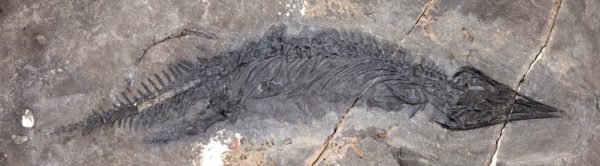
Thalattosaurs lived for millions of years during the Triassic, but disappeared near the end of the period. Until now, their poor fossil record made it difficult to understand why. In fact, it鈥檚 been over two decades since a new thalattosaur fossil from North America has been reported.聽
鈥淕iven the rarity of these fossils, this finding is extremely exciting and will help us better understand extinction vulnerability among reptiles and other animals living in the oceans today,鈥� added Kelley.聽
The species was partially named in honor of the local Tlingit people of Southeast Alaska, with the Tlingit name 鈥淕unakadeit.鈥� Gunakadeit is a sea monster of Tlingit legend that brings good fortune to those who see it.聽
The specimen was collected under permit 2011鈥�15 issued by the Alaska Department of Natural Resources and Office of History and Archaeology. The research was supported by a Peter Buck postdoctoral fellowship awarded by the National Museum of Natural History, Smithsonian Institution, and an award from the BASIS Foundation.