A team of Vanderbilt University biologists are a step closer to determining how prenatal exposure to long summer days or long winter nights affects long-term mental wellbeing.
In a titled 鈥淪equential Photoperiodic Programing of Serotonin Neurons, Signaling and Behaviors During Prenatal and Postnatal Development,鈥� published May 8 in the journal Frontiers in Neuroscience, postdoctoral scholar outlines how the team tested for enduring effects on the brain鈥檚 serotonin system and mood by 鈥渟witching seasons鈥� during mice pregnancies.
The mice experienced prenatal switches from either long, summer-like sunlight exposure to shorter, winter photoperiods, or the opposite. Then, postnatally, the offspring experienced the reverse seasonal shift of what they experienced in the womb.
They found that seasonal light exposure during pregnancy had effects on serotonin and depression that persisted into adulthood in mice. These findings build off longitudinal studies in humans, the Nurses’ Health Study and Nurse鈥檚 Health Study II, where a Harvard and Vanderbilt team that larger differences between minimum and maximum photoperiods during maternal pregnancy were related to lower lifetime odds of depression in offspring.
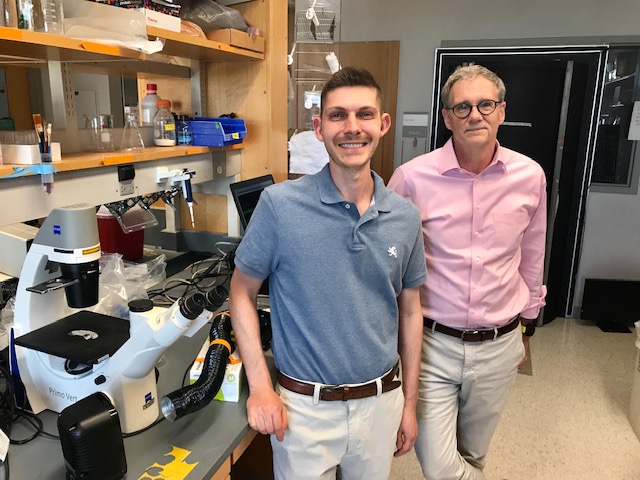
Siemann and the study鈥檚 principal investigator, Stevenson Professor of Biological Sciences , are trying to narrow down what interventions in pregnant mothers could lead to mental health benefits for their children later in life.
鈥淭here鈥檚 a lot of evidence that much of fetal development is informed by the mother鈥檚 environment 鈥� factors such as maternal stress and nutrition,鈥� McMahon said. 鈥淣ow you can add seasonal photoperiods to the list. They affect the way the offspring鈥檚 serotonin system is constructed.
鈥淚f we can understand specific developmental windows and manage the light cycle for pregnant moms, it could mean a pretty robust public health outcome of reducing the risk of major depression over a person鈥檚 lifetime. There are a lot of steps to go from where we are now to doing that, but it doesn鈥檛 involve a drug, just manipulating the timing of light each day.鈥�
This research was supported in part by National Institutes of Health grants R01 MH108562, 5T32MH018921-24 and U54HD083211