Two major factors matter when it comes to cells copying DNA: getting everything accurate in the sequence and how much of it is replicated. Mistakes can result in mutations, which can lead to diseases such as cancer.
, assistant professor of biological sciences at Vanderbilt, said scientists already understood the amount of DNA replicated had to do with where the duplication process started and ended 鈥� akin to a train carrying passengers from point A to point B. The train鈥檚 starting point and destination are important, but so is its speed. When it comes to DNA replication, that area hasn鈥檛 been explored as broadly.
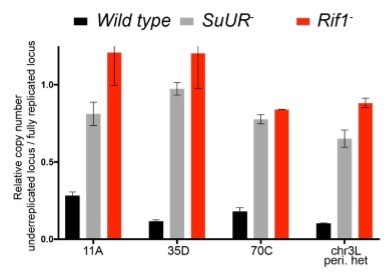
鈥淲e knew that the Suppressor of Underreplication (SUUR) protein was involved in slowing down the replication machinery, but we didn鈥檛 know how it worked,鈥� Nordman said. 鈥淚n fruit flies, which have all the machinery necessary to copy DNA virtually identically to humans, the SUUR protein physically interacts with the Rif1 protein, bringing it to the train. Once there, Rif1 has the capacity to inhibit or slow down replication.鈥�
Rif1 controls how much DNA gets copied in human cells too, but nobody knows how it does this job. While humans don鈥檛 have SUUR, they likely use another adaptive protein to help Rif1 slow down the replication machinery. This work was the foundation for a new National Science Foundation grant to interrogate how the Rif1 protein controls DNA replication, Nordman said.
His team鈥檚 latest findings on the subject are outlined in a paper titled 鈥淩if1 inhibits replication fork progression and controls DNA copy number in Drosophila,鈥� in the journal eLife. The funding for this work was from National Institutes of Health grants 5R00GM104151 and P30 AI110527.