New Vanderbilt research shows why ignorance is bliss when it comes to following a spokesperson
Just because you love a certain actor in the movies or athlete on the field or politician on TV, doesn’t mean you’ll love his or her personal beliefs. And when it comes to using a star to endorse a product, new Vanderbilt research finds the less people know about the celebrity’s personal opinions, the better.

“Celebrities are theoretically interesting because they are commonly familiar and liked, while being quite unknown,� said Vanderbilt Owen Graduate School of Management marketing professor Steven Posavac.
Posavac, the E. Bronson Ingram Professor in Marketing, and his coauthors did two phases of experiments and write about them in a forthcoming paper for Basic and Applied Social Psychology. In the first experiment, they gave study participants information on two prominent actors’ political views, religious practices and social attitudes.
Interestingly, the images of most celebrities are so carefully controlled that the researchers found it difficult to compile reliable information on possible test subjects in preparation for their experiments. However, they did find two famous figures whose personal viewpoints are well known and diametrically opposed: Tom Hanks and Mel Gibson. (The experiment was conducted well before the finalization of Gibson’s divorce and his recent heavily publicized conflict with his girlfriend in which a restraining order was filed against him.)
Movie life vs. real life
The study participants were randomly given descriptions about Hanks and Gibson — one solely detailing the actors’ film careers, the other discussing specific political and religious opinions.
When asked about the likability of each in general after seeing their film careers—and before information on the actors’ beliefs was offered— liberals and conservatives had pretty similar opinions about Hanks and Gibson. But according to the study,“when descriptions of the practices and attitudes of the celebrities were provided, liberals and conservatives diverged in their evaluations of the actors, particularly Gibson.�
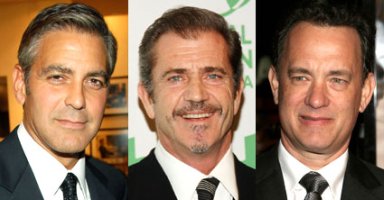
In the second experiment, researchers wanted to see if participants changed their opinions about certain celebrities when it was made clear just how little the participants knew about the stars’ political beliefs, faith and social attitudes.
The authors write, “Because perceivers do not know what they do not know, they over-weigh their limited knowledge in forming judgments.�
Study participants were chosen based on the results of a pre-test in which they favorably rated six celebrities: Will Smith, Jennifer Aniston, George Clooney, Natalie Portman, Johnny Depp and Scarlett Johansson. They were then asked a series of questions about the celebrities’ political and religious views.
What Posavac and his colleagues found is that “participants perceived the celebrities to have significantly less credibility� when the participants were made aware of how little they knew about the celebrities.
“In both cases, increasing knowledge of celebrities diminished their marketability,� said Posavac. “Initial attitudes toward celebrities are usually so glowing that there’s little room for improvement, but if you disagree with their views, there’s lots of room for the star to fall.�
What’s more, distinct groups differ in how they perceive celebrities once they have more information about their views. In the experiment with Hanks and Gibson, liberals and women tended to rate Gibson less favorably with more information. Similarly, likability ratings among conservatives and men dropped as they learned more about Hanks’ views.
“The findings reveal one of the important foundations underlying the adoration of celebrities: ignorance,� Posavac and his co-authors write. “Unless celebrities harbor mainstream attitudes that have widespread appeal, they are probably better off financially keeping their opinions and practices private.�