Say a big antitrust court case hinges on whether the earth is round or flat. Expert testimony from scientists will be key, leading to the familiar scenario of 鈥渄ueling experts鈥� contradicting each other in the courtroom.
No-brainer, right? The attorney on the side of the earth being round is going to win.
Believe it or not, that鈥檚 not necessarily true. The court system, as it stands, conspires to give the flat-earth side a better chance than it deserves. What could happen is this: One of 99 out of 100 available experts testifies that the earth is round, and the one out of 100 who disagrees testifies that the earth is flat. To jurors, it appears that scientific consensus on the subject is divided roughly 50-50.
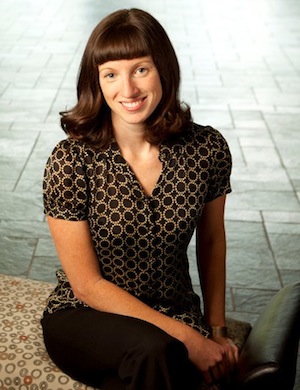
鈥淚t鈥檚 called the 99-1 problem,鈥� says , assistant professor of law at . 鈥淭he problem with the adversarial system of law is we don鈥檛 do a comprehensive look at scientific issues. We don鈥檛 even do a random sample.鈥�
So, even if there鈥檚 99 experts who will say the world is round, if the other side can find just one to say the opposite, the real scientific consensus on the issue might not get through to jurors.
鈥淚n the context of litigation, small, marginal disagreements can be made to seem important and settled issues can be made to appear hopelessly deadlocked,鈥� Haw writes in the paper, It will be published in a forthcoming issue of the .
Haw, an expert on antitrust law and the intersection of science and the law, gives two suggestions in the article on how to address this issue.
鈥淭he first is a pretty modest idea 鈥� just to encourage or require testimony on the status of consensus within the scientific community,鈥� she said. 鈥淭his could be helped by some systematic analysis of opinion on various scientific or social scientific issues.鈥�
Haw鈥檚 second suggestion would be a more substantive change in trial procedure. She believes a 鈥減eremptory strike鈥� system 鈥� the same as used for jurors 鈥� might be useful for expert witnesses.
鈥淭he experts that are the most damaging to any one side wouldn鈥檛 be used,鈥� Haw said. 鈥淪ometimes those would be the best experts,鈥� she admits. 鈥淏ut if you can call any of 99 experts who will say virtually the same thing, then you just go down the list,鈥� she said. 鈥淏ut if you have only one expert in the first place, you might not bring the case to court if you knew that a peremptory strike might wipe out your best witness.鈥�
Scientific consensus tends to shift over time, so there would be cases under Haw鈥檚 system where an 鈥渙utlier鈥� expert who is actually right might find themselves forbidden to testify.
鈥淪cientific consensus, while wrong sometimes, is the best thing we鈥檝e got,鈥� Haw said. 鈥淲e need to be able to organize our affairs around what鈥檚 generally accepted to be true at any time, rather than try to hit a moving target of where we think science is going.鈥�