Prospective parents have a lifeline at the Vanderbilt International Adoption Clinic
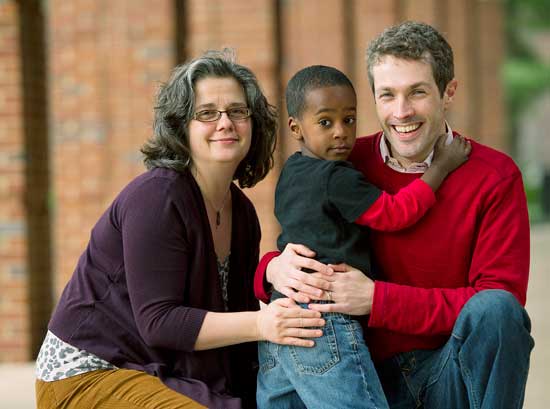
Late at night in Addis Ababa, Ethiopia, Carol Dunne is huddled over a laptop computer, desperately trying to get an Internet connection. Dunne and her husband are in the final stages of adopting a 17-month-old boy named Binyam, and upon arriving at the orphanage they discover the child has a fever and a rash. With her new-parent radar on high alert, Carol reaches out via email to the Vanderbilt International Adoption Clinic鈥檚 , who has been advising them throughout the adoption process.
鈥淚t was such a gift to know that we could turn to Dr. Rothman for information and support before, during and after the adoption,鈥� said Dunne, registrar for the . 鈥淟ike any new parents, we are learning everything as we go along. When we got to Ethiopia it was stressful. It wasn鈥檛 that the Ethiopian doctors were unhelpful, it鈥檚 just that we needed that lifeline to our team back home.鈥�
Receiving emails and phone calls at all hours from her clients is not uncommon, said Rothman, a pediatrician. 鈥淲e prepare them for the possibility that the child will need treatment for conditions and illnesses common to the region,鈥� she said. 鈥淸rquote]It鈥檚 an overwhelming thing when you鈥檙e thousands of miles away from your support network and have concerns.[/rquote] For me, it鈥檚 an honor to be able to help these families during this important time.鈥�
Binyam is now a healthy, happy 3-and-a-half-year-old. 鈥淗e never gets sick, which is amazing,鈥� Dunne said. 鈥淎nd he鈥檚 into everything, like any other child his age. We are just in love with him.鈥�
The was opened at Vanderbilt in 2002 by several medical care providers, including Rothman, who sought to support the needs of adoptive parents throughout their often months- or years-long journeys to have children of their own. The clinic employs pediatricians, occupational therapists and developmental psychologists to deal with the medical, developmental and emotional needs of the child. The clinic serves parents across the Southeast, charging reasonable flat rates for pre-adoption services, such as medical records evaluations and travel consultations; and post-adoption services, such as examinations of the child, which are normally covered by health insurance.
According to the U.S. Department of State, 9,320 children from other nations were adopted by American parents in 2011. Tennessee represents 289 of those international adoptions. Ethiopia, Russia and China were the top three countries from which Americans adopted last year.
The Dunnes came to the clinic when they were in the early stages of the adoption process, months before they received a referral from their agency.
鈥淲e wanted to do some research and see what we were getting ourselves into,鈥� Carol Dunne said. 鈥淒r. Rothman spoke with us at length about what kinds of medical and developmental issues a child from Ethiopia might face. She was very matter-of-fact and gave us the information we needed to make our decisions.鈥�
When Dunne and her husband got their referral for Binyam, they were thrilled. But the information provided in the medical records was scant and sometimes confusing. They consulted with Rothman and the other clinicians to fill in the blanks.
鈥淓very time we got something, we forwarded it to the clinic,鈥� Dunne said. 鈥淗e seemed healthy from the pictures, but we weren鈥檛 sure if his weight was on track. He was 12 months at that time and he wasn鈥檛 really walking yet. We had a lot of questions.鈥�
The clinicians helped the Dunnes establish reasonable expectations before their trip to Ethiopia to pick up Binyam. When they returned, the clinicians evaluated him for parasitic illnesses such as Giardia, signs of malnutrition and other common ailments.
鈥淚 think every parent, adoptive or not, wonders if their child is developing at a normal rate, and we were concerned in the beginning,鈥� Dunne said. 鈥淭he doctors at the clinic were constantly assuring us that he would catch up quickly, and he did. They would tell us, 鈥楬e鈥檚 pointing at things; that鈥檚 good. He鈥檚 making eye contact; that鈥檚 good.鈥� It was so reassuring.鈥�
Education, Rothman emphasizes, is key for the adoptive parents. The more they understand the potential challenges their child may face as a result of early life experiences, the better equipped they鈥檒l be to effectively parent the child.
鈥淸lquote]The child may have lived in an unhealthy situation at an orphanage,鈥� Rothman said, 鈥渟o parents need to recognize that they need to have a low threshold for seeking assistance from us or other providers for resulting conditions.鈥漑/lquote]
is a psychologist at the clinic. She sees families who have concerns about their child鈥檚 adjustment to being adopted. Issues like sleeping problems or anxiety are not uncommon, and she can provide assessments and both short-term and long-term intervention solutions.
Through the facilitation of programs such as Parent Child Interaction Therapy (PCIT) and Nurturing Engagement for Attachment Repair (NEAR) by clinic staff, parents can learn how their adopted child may differ from other children because of early experiences, and how loss and abandonment affect emotional and brain development.聽Addressing these potential challenges, rather than ignoring them, is key to establishing trust and building a strong attachment between parents and child, Ashford said.
鈥淗elping parents learn the importance of reading their child鈥檚 cues and then how to relate to them in a consistent, authoritative but emotionally contingent way is the goal,鈥� she said. 鈥淏eing a part of that process is exciting and rewarding.鈥�
The Dunnes were happy to discover that when it was time to select a permanent pediatrician, they were able to stay with Rothman.
鈥淲e were so glad because she has been with us through this amazing journey,鈥� Dunne said. 鈥淏inyam is happy, loves school, and his best friend is also an Ethiopian adoptee. He can point out Ethiopia on the map. We鈥檝e all come so far.鈥�