Investigators at and several other centers may be one step closer to finding out why some melanoma patients relapse after treatment with a promising new drug.
Approximately half of all patients with the most deadly form of skin cancer have a mutation in the BRAF gene in their tumors that drives the growth of their cancer.
The discovery of this altered molecular pathway in cells led to the development of the new drug vemurafenib, which blocks the pathway.
Melanoma patients with the BRAF mutation who are treated with vemurafenib live significantly longer than patients on conventional treatments and derive a striking clinical benefit.
鈥淸rquote]This new drug doesn鈥檛 just extend life, it gives our patients a new lease on life,鈥� said , professor of medicine and director of the .[/rquote]
鈥淭he sad thing is all of these patients eventually relapse, so this has just been a roller coaster for patients and their families.鈥�
Now, researchers have found clues to the mystery of what is causing resistance to the BRAF-inhibitor drug and have suggested new targets for treatment.
Sosman, , associate professor of surgery, and , research instructor in cancer biology, are among the co-authors on the paper published last month in .
The investigators exposed BRAF-mutant cell lines to increasing doses of vemurafenib until some of the cell lines developed resistance to the drug.
Then they analyzed the DNA from the resistant cell lines, as well as DNA from tumors of patients who had developed resistance to the anti-BRAF drug.
鈥淲e found that certain resistant cells create a different form of BRAF that is shorter,鈥� explained Sosman. 鈥淭he fact that it鈥檚 smaller means that it has lost a portion of the protein which allows it to couple with itself, and by coupling it can activate the pathway.
鈥淚n fact, the drug may enhance the activation so what you鈥檝e done is give the cell another way to activate the pathway even in the presence of the drug.鈥�
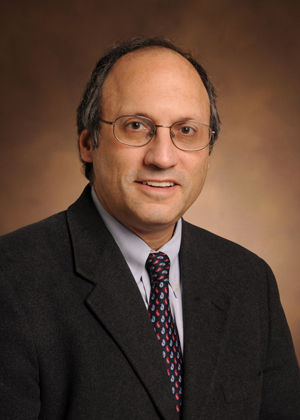
Why the protein is spliced differently is still unknown.
鈥淭his is a unique mechanism and it was present in about 30 percent of the samples we studied,鈥� said Sosman.
Other recent melanoma research has found additional alternate pathways around the mutated BRAF gene, which means that the cancer can be reactivated by several different mechanisms.
Sosman said there may be multiple mechanisms in different sites within the same patient that can find a way around anti-BRAF drugs.
鈥淪o how do you treat in this situation? You can鈥檛 give the patient dozens of drugs so there has to be a way to prevent this from developing,鈥� Sosman explained.
VICC investigators are collaborating with other cancer researchers on new studies aimed at finding treatments that give patients with metastatic melanoma a more durable response.